The Model Isn’t the Hard Part Anymore
What comes after the LLM race, and how enterprises should plan for it.
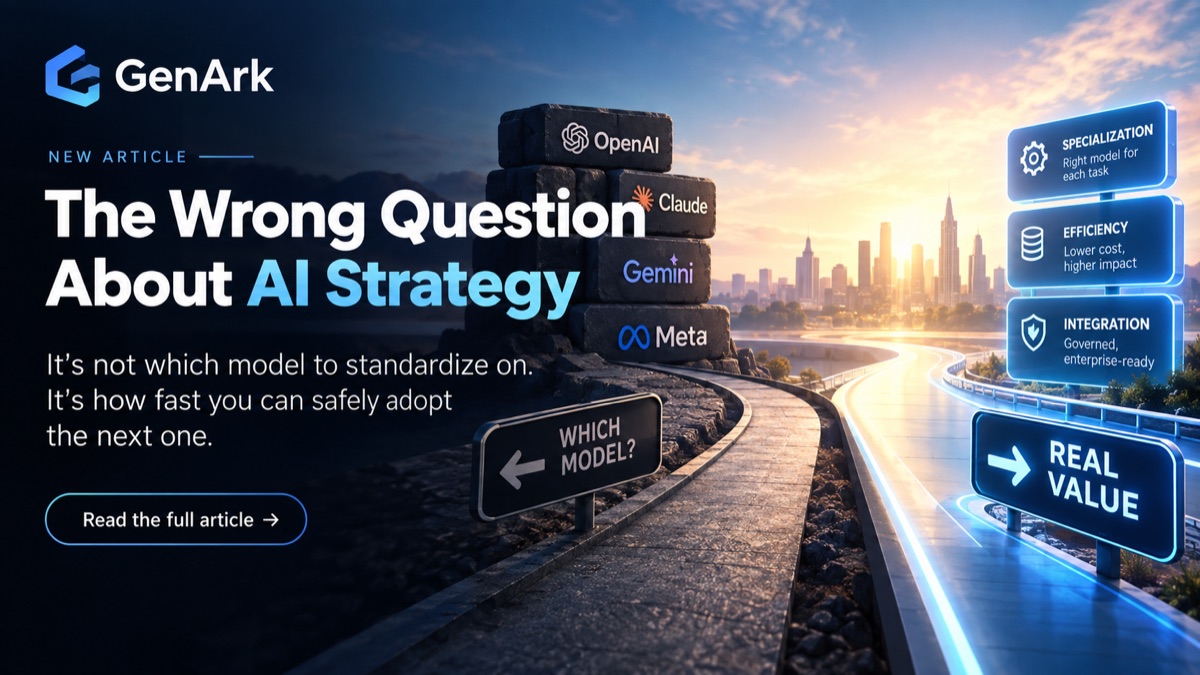
For the past three years, almost every enterprise AI conversation we’ve been part of started with the same question: which model should we use?
It made sense at the time. Models differed a lot in what they could do, and choosing the wrong one could sink a project. That’s no longer true for most business work. The question hasn’t gone away, but it has stopped being the one that decides whether AI pays off.
Capability is no longer scarce
The numbers moved faster than most planning cycles. On Humanity’s Last Exam, a benchmark designed to be hard for AI, the top model scored 8.8% in Stanford’s 2025 AI Index. By April 2026, leading models were above 50%. METR measures how long a software task an AI agent can complete on its own, and it finds that length has been doubling roughly every three months since 2024.
The leaders are also bunched together. Stanford’s 2026 AI Index put the top model’s lead at just 2.7%, with open-weight models close behind. The price has collapsed too: GPT-3.5-level performance fell from about $20 per million tokens to $0.07 in two years.
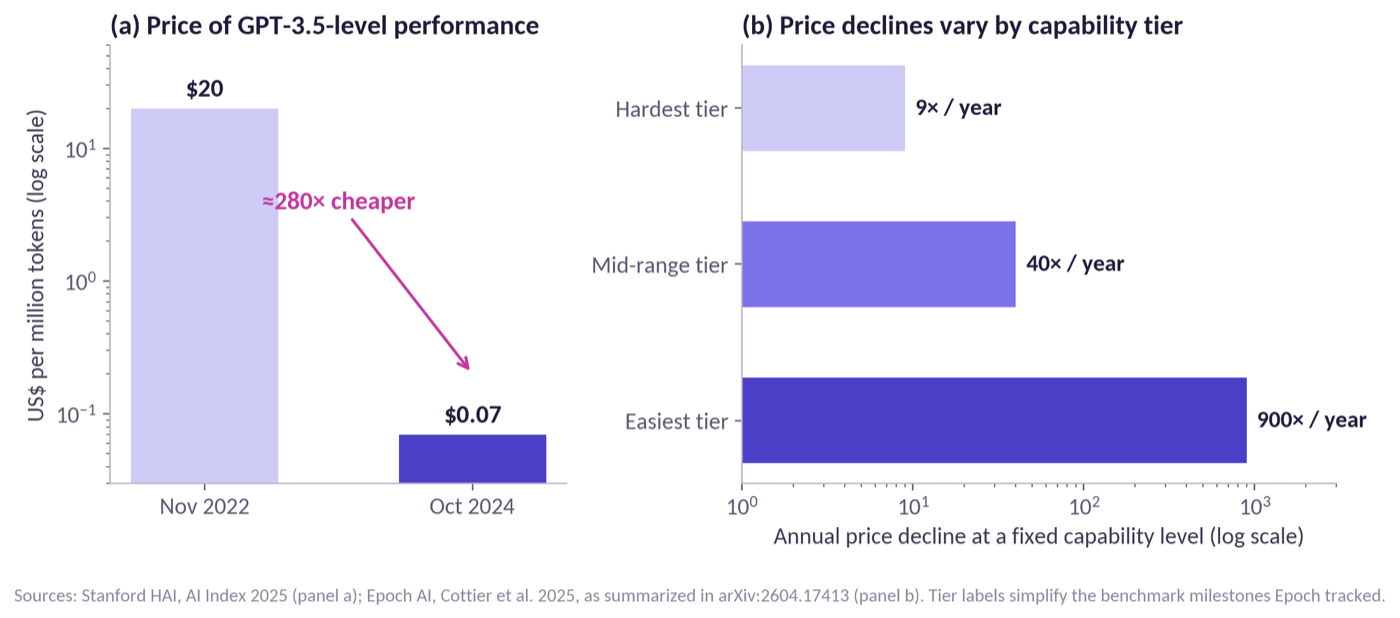
When several providers are within a few points of each other and prices drop every quarter, the model stops being a strategy. It becomes an input.
Is progress hitting a wall?
The honest answer is that one recipe is slowing down and the field is not.
The recipe that’s flattening is “train a bigger model on more text.” Epoch AI estimates that frontier training will use up the stock of high-quality public human text sometime between 2026 and 2032. Ilya Sutskever, one of the architects of the scaling era, has said the industry is moving from an “age of scaling” back to an “age of research.”
Capability is still climbing, though, through other routes: reinforcement learning, giving models more time to reason, and better use of tools. For enterprises, the conclusion is the same either way. Waiting for a smarter model is rarely the right plan. Getting more from the models you already have almost always is.
Where the value moves next
Specialization
Most AI work inside a company is narrow and repetitive: extract these fields, classify this request, call this system. Using the largest model for every step is like hiring a surgeon to take temperatures. Researchers at NVIDIA argue that small language models are good enough and far cheaper for most of these steps, and Gartner expects enterprises to use small, task-specific models three times more than general-purpose LLMs by 2027. The catch is that a small model is only as good as the data it’s trained and tested on. Specialization starts with getting your data in order.
Efficiency
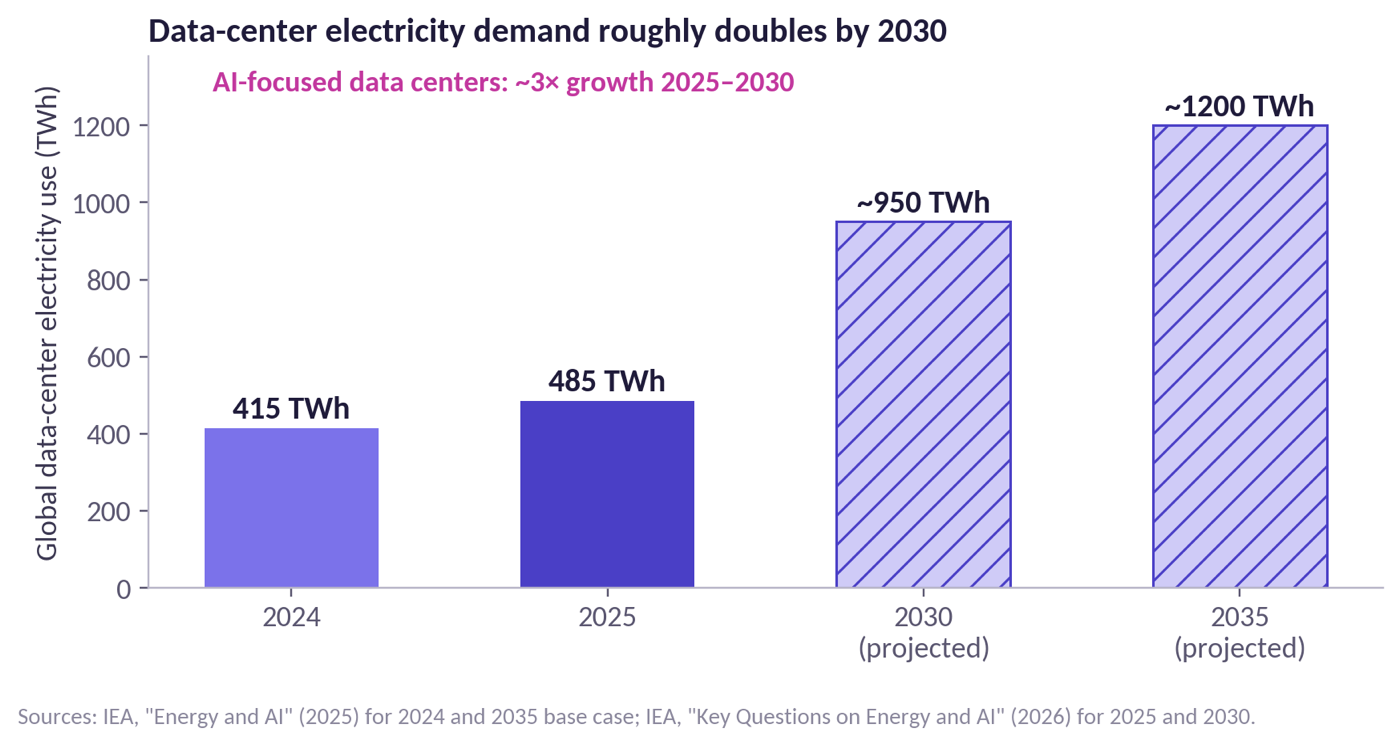
Cheaper tokens haven’t meant smaller AI bills. When intelligence gets cheaper, organizations use much more of it, and AI agents multiply the calls. Energy is becoming a real constraint as well.
The lever most companies haven’t pulled yet is routing, which sends each request to the least expensive model that can handle it well. UC Berkeley’s RouteLLM research cut costs by more than half without losing quality. The number to manage is cost per outcome, not price per token.
Integration
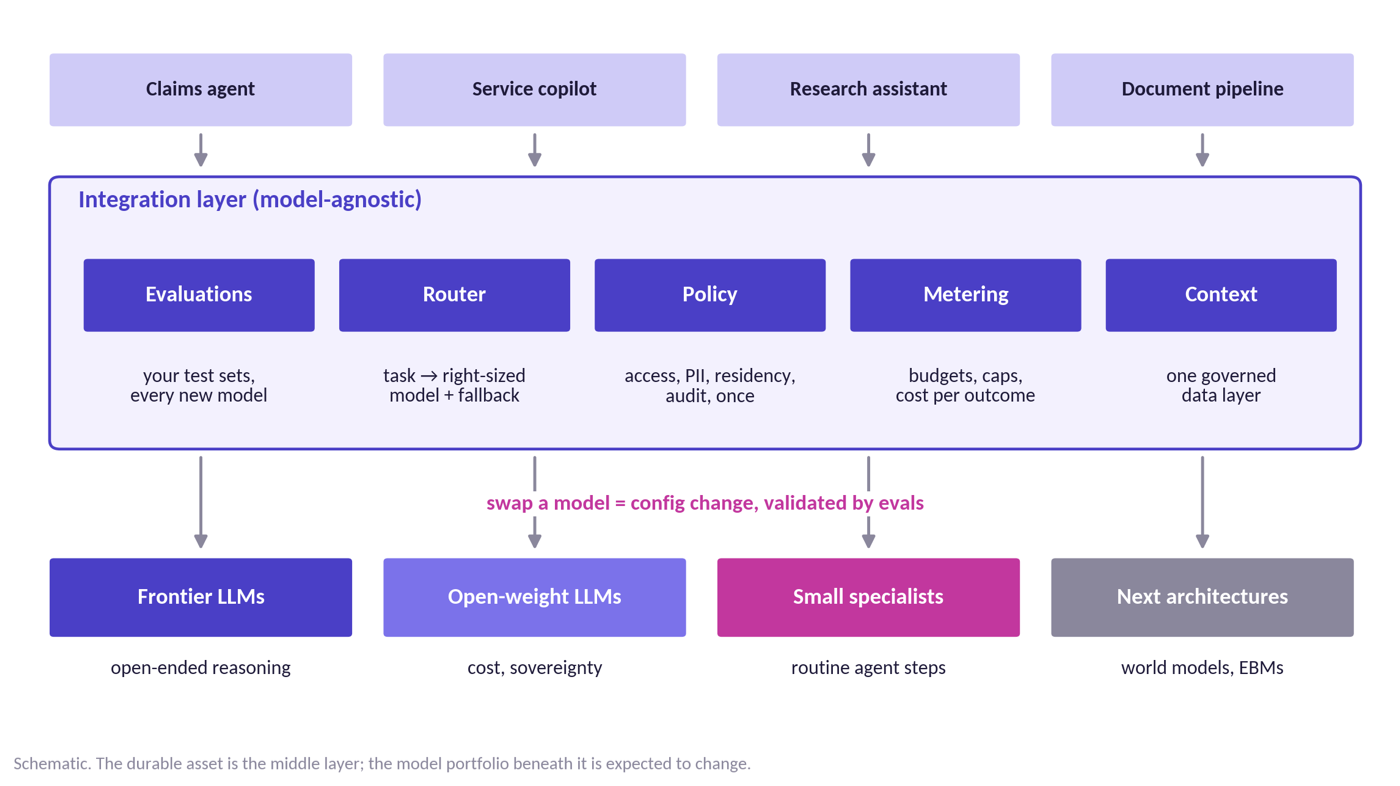
This is where the lasting advantage lies. It rests on four things:
- Your own test sets for judging models on your real work
- One governed data layer that every model draws from
- Spending limits and cost tracking for each team
- Access and audit rules enforced once, in the layer every request passes through
With that in place, switching to a better model is a configuration change you can validate in days. Without it, every switch is a migration project, so nobody switches.
Keep an eye on what comes after the LLM
Some of the field’s most respected researchers are betting that the next breakthrough won’t be a language model at all. Yann LeCun’s AMI Labs raised $1.03 billion to build “world models” based on his JEPA architecture, which predicts an abstract picture of what happens next rather than the next word. Other researchers are reviving energy-based models, which search for and check an answer instead of producing it word by word, and spend more effort on harder problems.
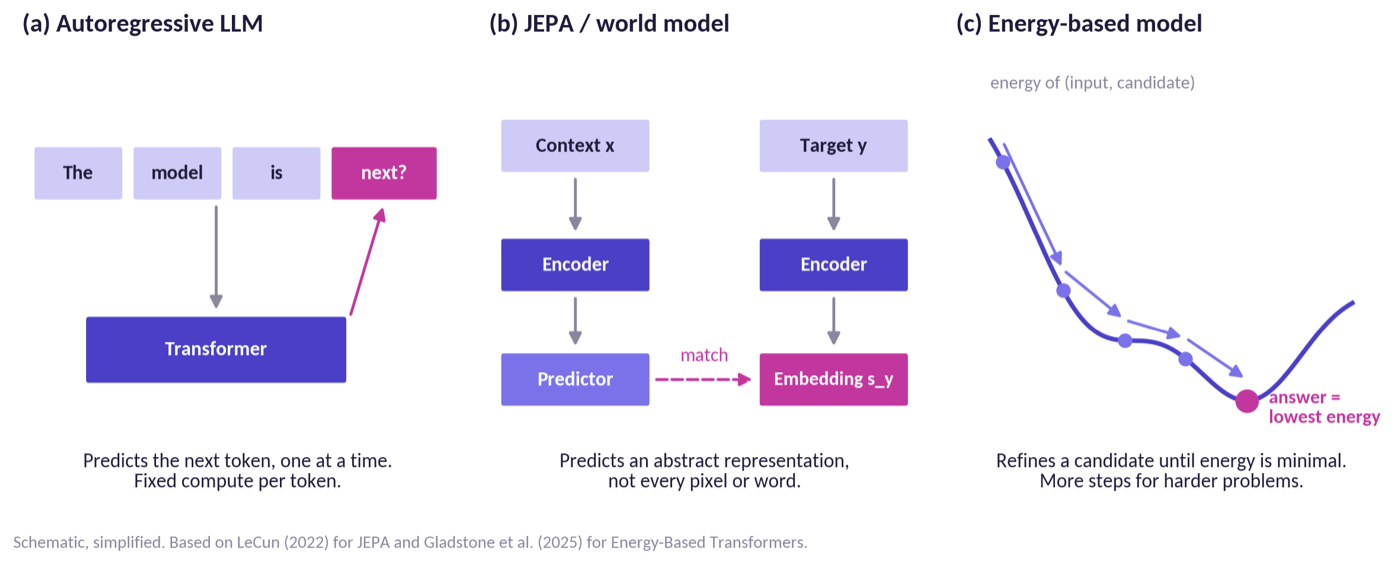
Both are early, and neither is a reason to change your plans today. The lesson is to stay flexible. The dominant AI architecture of 2030 may not be the one we use now, and an AI setup tied to a single model family carries a risk most companies haven’t priced in.
The models will keep improving for everyone at the same time. The advantage goes to the organizations that can put the next one to work first, safely.
The question for your next AI review isn’t “which model are we on?” It’s “how quickly could we switch, and how would we know it was better?”